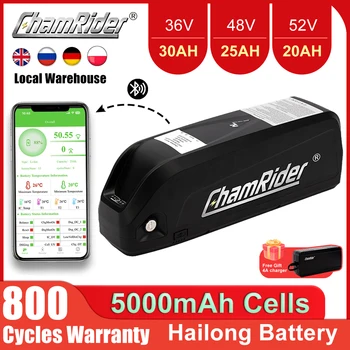
A lithium-ion pack is only as smart as its BMS. ChamRider integrates multi-layer battery management across its entire range: per-cell voltage monitoring, automatic cutoff on overvoltage or temperature deviation, and active balancing at end-of-charge. This is the engineering that separates a pack lasting 800 cycles from one that degrades after 200.

CHAMRIDER BATTERIES
Available on AliExpress
CHAMRIDER BATTERIES





CHAMRIDER BATTERY BOX



CHAMRIDER COMPONENTS
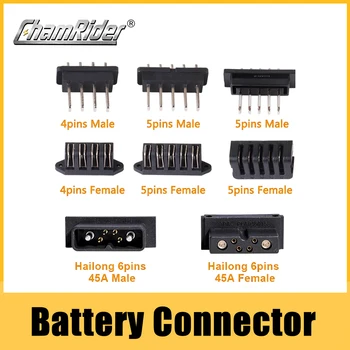



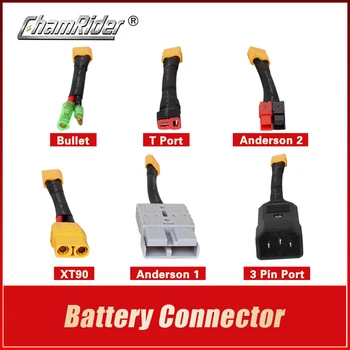



The BMS (Battery Management System) is the electronic core that protects the pack cell by cell and manages communication with the motor controller. It monitors each cell’s voltage in real time (high cutoff at 4.2 V, low cutoff at 2.5–3.0 V depending on chemistry), tracks charge and discharge current (cutting off on short-circuit detection within milliseconds), and monitors pack temperature (operational range 0–45 °C). ChamRider BMS units perform passive cell balancing at the top of each charge: cells that reach 4.2 V first have their excess energy bled through a bypass resistor while remaining cells finish charging, ensuring voltage uniformity across the entire pack after every session.
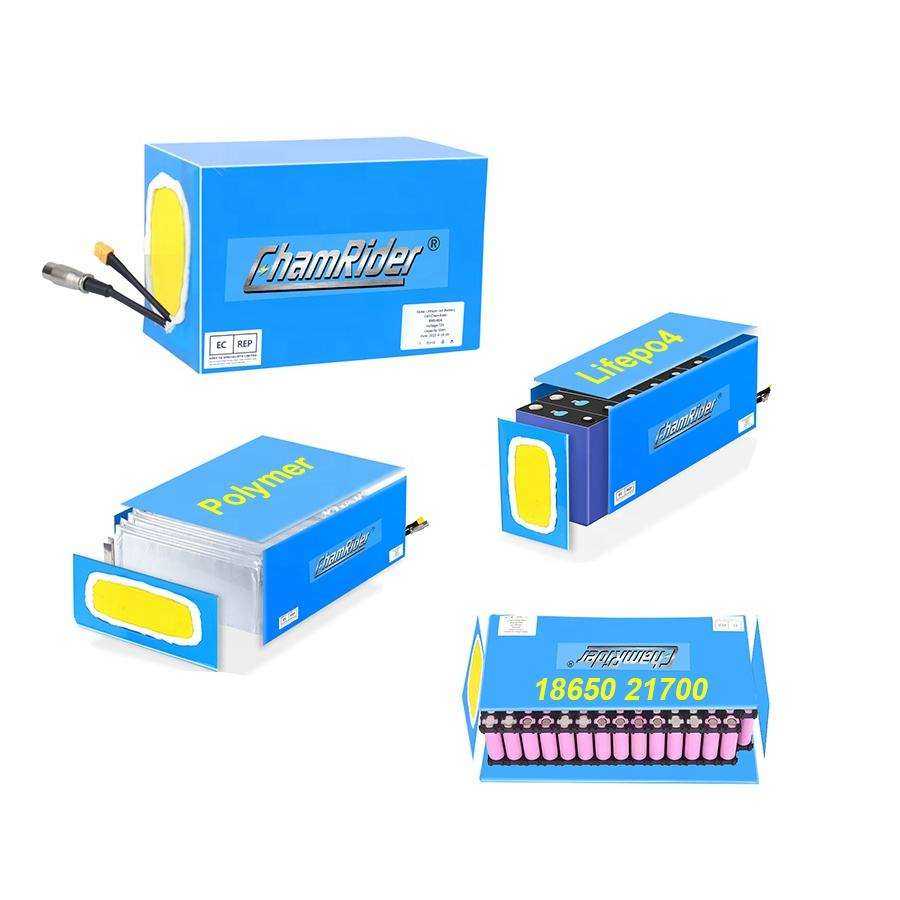
Cylindrical cells (18650 or 21700) and prismatic cells represent different engineering trade-offs. Cylindrical cells have mechanically robust steel casings, benefit from decades of large-scale standardized manufacturing, and cool naturally through inter-cell air gaps. Prismatic cells achieve higher volumetric integration density — less wasted space in the pack housing — but require more careful thermal management because their flat surfaces create uneven heat distribution under load. For European e-bike applications where ambient temperatures remain moderate and mass production cost matters, cylindrical cells remain the dominant format with the deepest industrial maturity.
Active cell balancing, unlike passive balancing, transfers energy from higher-charged cells to lower-charged ones via an inductive DC-DC circuit rather than dissipating the difference as heat. This approach is still uncommon in mainstream e-bike packs due to circuit cost, but becomes relevant for high-capacity packs (800 Wh and above) where a single weak cell can reduce effective pack range by 10–15 % as the BMS cuts off to protect it. ChamRider integrates active balancing in its high-capacity range — a technical difference that becomes measurable after 300–400 cycles, when passive-balanced packs start showing visible cell divergence.