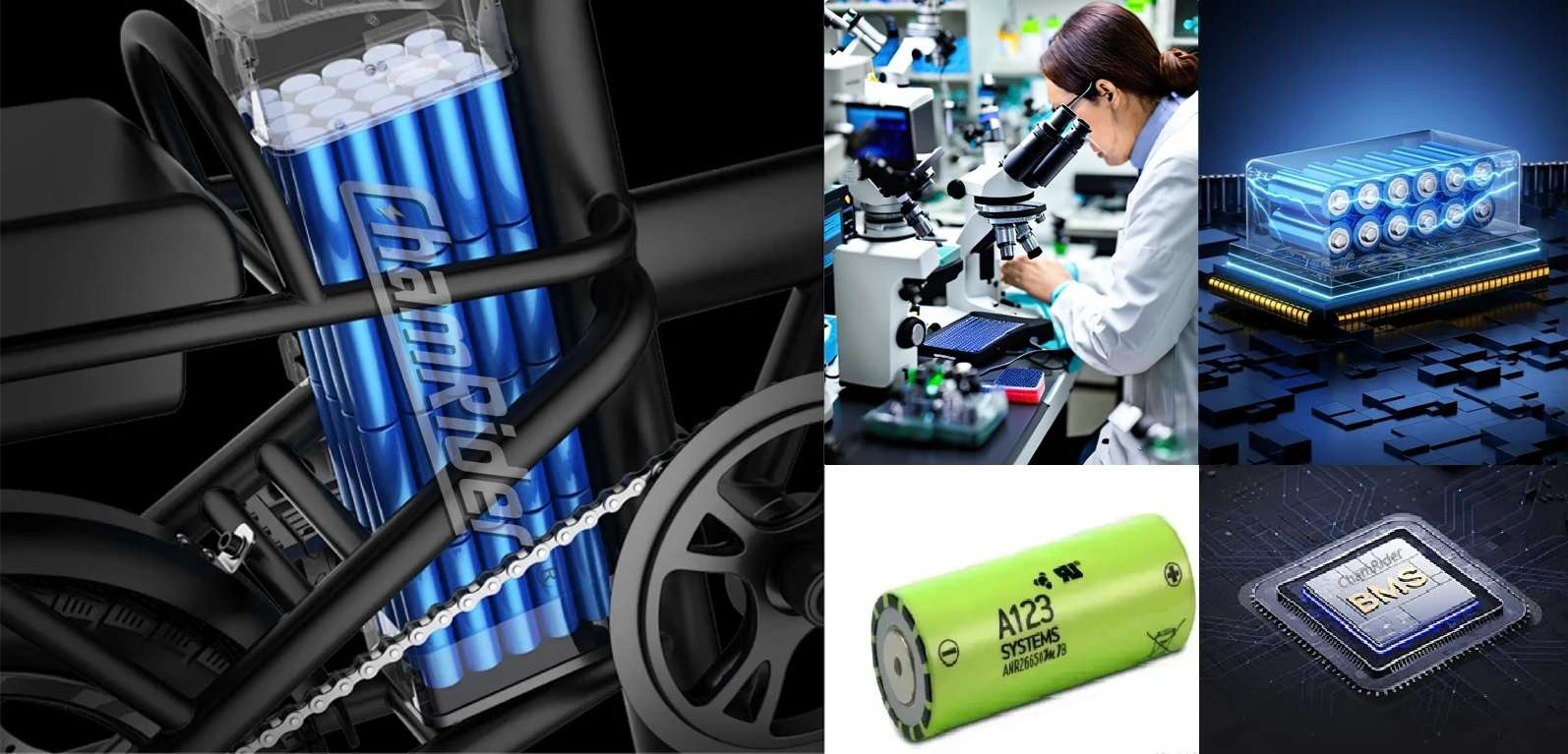
Lithium-ion batteries don’t fail suddenly — they degrade gradually through poor storage and charging habits. The most common culprit: storing at full charge over winter, or running repeatedly to zero. ChamRider batteries include BMS protection against the worst cases, but cell chemistry still responds to how you treat it. Here’s what actually makes a difference.
Frequently Asked Questions
How do I maintain a Chamrider e-bike battery?
Charge regularly without letting the battery drop below 20%. Avoid charging to 100% for daily use; an 80-90% charge extends the lifespan of NMC cells.
At what temperature should a LiPo battery be stored?
Store the Chamrider battery between 10 and 25 degrees C, with a charge level of 40 to 60%. Avoid exposure to frost (below 0 degrees C) or extreme heat (above 45 degrees C).
What to do if the battery no longer charges?
First check the charger (indicator, connector), then the BMS fuse. If the pack is deeply discharged, a standard charger can no longer prime it. Contact Chamrider after-sales service for a conditioned pre-charge.
Can a Chamrider battery be used in the rain?
Chamrider batteries are generally IPX4-rated (splashproof). Avoid direct immersion and high-pressure water jets. If wet, dry at room temperature before the next charge.

CHAMRIDER BATTERIES
CHAMRIDER BATTERIES


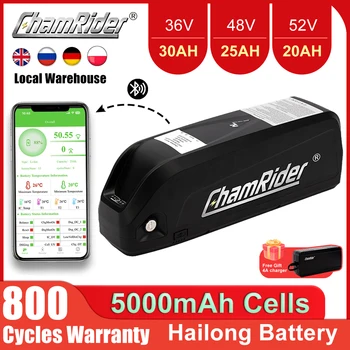



CHAMRIDER BATTERY BOX



CHAMRIDER COMPONENTS




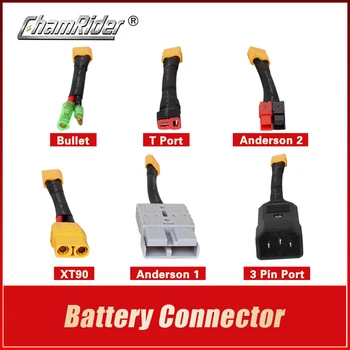


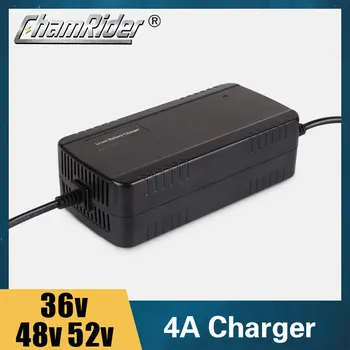
- Avoid complete discharges: It’s best not to let the battery fully discharge. A charge level between 20% and 80% is optimal to preserve its longevity. Regular recharging helps maintain its performance.
- Use a compatible charger: Always opt for a charger recommended by the manufacturer. Using an unsuitable charger can damage the battery and reduce its lifespan.
- Monitor temperature: Batteries work best at room temperature. Avoid exposing them to extreme hot or cold, as this can affect their performance.
- Proper storage: If you need to store your battery for a long period, make sure it’s about 50% charged. Store it in a cool, dry place to prevent degradation.
- Avoid frequent charge cycles: Limit unnecessary charge and discharge cycles. Each cycle slightly reduces the battery’s capacity, so it’s best to charge only when necessary.
Best Practices for Battery Storage
The optimal charge window for lithium-ion cells is 20 % to 80 % of rated capacity. Regularly charging to 100 % keeps cells under peak voltage stress — a cumulative effect that accelerates cathode degradation cycle by cycle. Setting your charger’s cutoff to 80 % (approximately 43.2 V on a 48 V pack) and avoiding discharges below 20 % (around 38.4 V) can effectively double pack lifespan compared to unconstrained charging. For days when you need full range, an occasional 100 % charge causes no measurable harm; it’s the daily habit of full charges that shortens life.
Winter storage is one of the most damaging scenarios for a lithium-ion battery that is not properly prepared. Storing a fully charged or fully depleted pack for several weeks significantly accelerates cell degradation. The correct procedure: bring the pack to 50 % state of charge (approximately 41 V for a 48 V pack), store it in a dry location at 10–20 °C, and check voltage every four to six weeks. A drop below 30 % during storage indicates either a BMS parasitic drain issue or a weak cell self-discharging faster than the rest of the pack — both warrant inspection before the next season.
Three warning signs call for immediate battery inspection: visible or tactile swelling of the casing, which indicates electrolyte decomposition gas build-up inside the cells; abnormal heat during storage or light use rather than only during charging and riding, which can signal internal short-circuit or thermal runaway in a single cell; and a capacity loss exceeding 20 % compared to early use, suggesting a weak cell dragging down overall pack output. In any of these situations, stop using and charging the battery immediately and contact ChamRider support before attempting another charge cycle.
- Check the charge indicator: Start by examining the battery’s status via its charge indicator. If it’s low or blinking, it may indicate a failure.
- Test run time: Note how long the battery powers your device. If it’s significantly shorter than usual, this may be a sign of degradation.
- Listen for unusual sounds: During charging or use, listen for strange noises such as crackling or buzzing, which can indicate internal problems.
- Check temperature: An overheated battery during charging or use may signal a malfunction. Excessive temperature often indicates a short circuit or failure.
- Check connections: Ensure connections are clean and tight. Loose or corroded connections can lead to performance loss.
- Use a multimeter: If you’re comfortable with electronics, use a multimeter to check battery voltage. Values lower than the manufacturer’s specs can indicate a weakened battery.
These steps effectively diagnose performance problems with your ChamRider battery, determining whether it needs replacing or proper recharging.
ChamRider Battery Safety
Precautions when using ChamRider batteries
Follow the manufacturer’s recommendations for charging and discharging. Always use the specified charger and avoid overcharging, as this can cause overheating and reduce battery life. Regularly monitoring battery condition is also recommended. Inspect it for possible damage such as leaks or deformities, which may indicate a problem.
Keep the battery in an appropriate environment. Avoid extreme temperatures, both hot and cold, as they affect battery performance and safety. A cool, dry place is ideal for storage.
Avoid subjecting the battery to excessive shocks or vibrations, which could damage its internal components and increase the risk of a short circuit. Finally, if there are signs of overheating, immediately disconnect the battery and let it cool in a safe place.
By following these precautions, you’ll maximize your ChamRider battery’s safety, performance, and longevity, contributing to more responsible and efficient use of your electric vehicles.
Certifications and international safety standards respected by ChamRider
ChamRider adheres to the strictest international safety standards in designing and manufacturing its batteries, ensuring user safety and product reliability.
Among key standards is ISO 9001, certifying a quality management system. This standard ensures every production step is controlled to meet the highest requirements.
ChamRider complies with UN 38.3, which governs lithium-ion battery safety testing. This involves rigorous evaluations like drop, pressure, temperature, and short-circuit tests, ensuring batteries withstand normal use conditions without the risk of explosion or overheating.
ChamRider batteries also meet CE standards. This guarantees that products sold in the European Union adhere to safety, health, and environmental protection criteria, including specific requirements for design, manufacturing, and product labeling.
ChamRider ensures that its batteries comply with RoHS and WEEE regulations, limiting hazardous substances and promoting responsible recycling of electronic products. By following these standards, ChamRider demonstrates its commitment to safety, quality, and sustainability, reinforcing consumer confidence in its products.
How to avoid overheating and explosions
Avoiding overheating and explosions of ChamRider batteries is essential for ensuring safety and longevity of electric bikes.
Strictly follow the manufacturer’s instructions during the charging phase. Use only the charger provided with your ChamRider battery. Avoid exceeding recommended charging times. Overcharging is one of the main causes of overheating.
Regularly and thoroughly monitor the battery’s condition. Check for signs of deformation or leakage. If you notice any abnormalities, immediately disconnect the battery and consult a professional.
Storage is also crucial. Avoid leaving batteries in extreme environments. Whether very hot or very cold, these conditions are critical. A temperate, dry place is ideal for extending service life and preventing risks.
When in use, avoid subjecting the battery to strong vibrations or shocks, which can damage internal components and increase short-circuit risk.
Avoid using the battery when it’s very hot. Let it cool before recharging or using it again.
By following these recommendations, you minimize the risk of overheating and explosion an
Related guides: ChamRider lithium-ion batteries — battery technology — battery selection guide
Related guides: ChamRider lithium-ion batteries — battery technology — battery selection guide
See also: ChamRider Home — ChamRider Batteries — Accessories ChamRider — Range & capacity — Battery comparison — Battery technology — Choosing guide — Customer reviews