
CHAMRIDER BATTERIES
CHAMRIDER BATTERIES



CHAMRIDER BATTERY BOX



CHAMRIDER COMPONENTS



By Thomas Rivière, Product Analyst — Last updated: 30 September 2026
The ChamRider 52V 13Ah battery: who is it for?
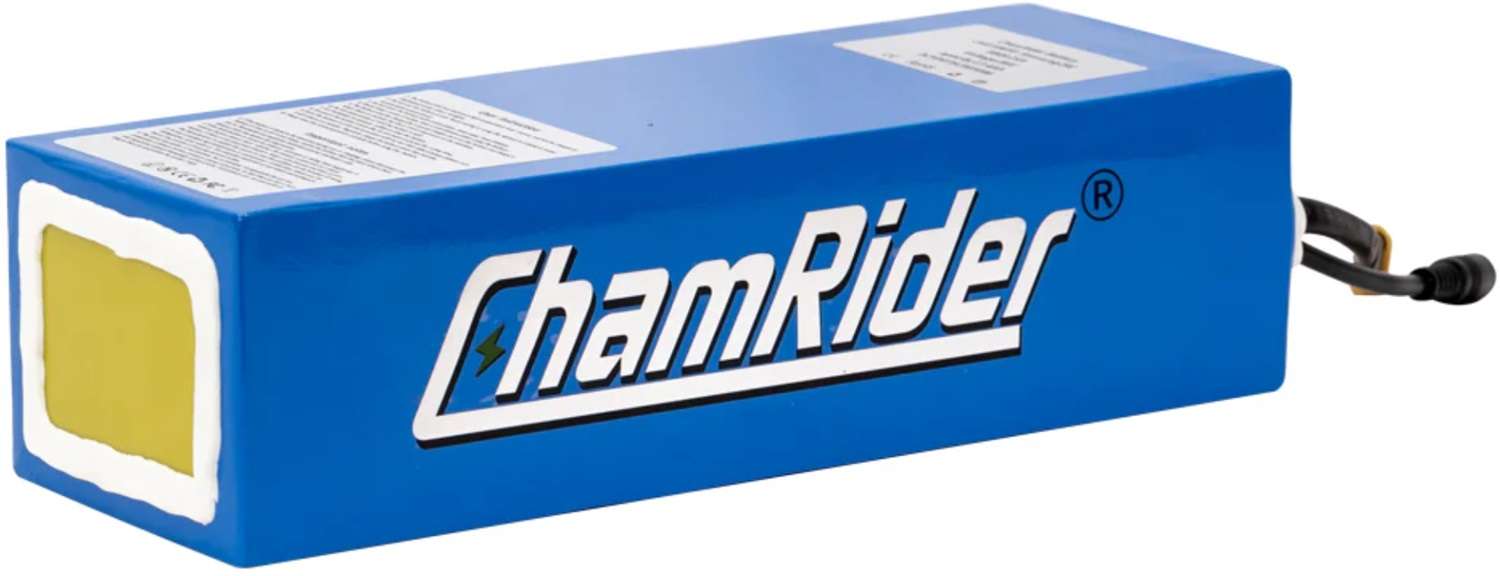
The 52V 13Ah, with 676 Wh (52 x 13), is the only 52V reference in the ChamRider lineup. It doesn’t target maximum range — the 48V 20Ah stores far more energy — but performance: top speed and motor responsiveness, on systems specifically designed for this voltage.
Why 52V exists alongside 48V
An electric motor’s rotation speed is directly tied to supply voltage. At the same nominal power, a 52V system reaches a higher top speed than a 48V system, and generally responds with more punch on acceleration. This is a controller and motor design choice, not a simple setting: a motor designed for 48V doesn’t automatically benefit from higher voltage, and conversely a 52V system isn’t built to run on 48V. The 52V 13Ah is therefore only relevant if your bike is specifically equipped for this voltage.
676 Wh: where the 52V 13Ah sits in the lineup
Across the ChamRider lineup:
- 36V 10Ah — 360 Wh
- 36V 15Ah — 540 Wh
- 48V 12Ah — 576 Wh
- 48V 14Ah — 672 Wh
- 48V 15Ah — 720 Wh
- 48V 20Ah — 960 Wh
- 52V 13Ah — 676 Wh (this reference)
The 52V 13Ah stores almost identical energy to the 48V 14Ah (672 Wh), within 4 Wh — but the two aren’t interchangeable. Never choose between them on Wh alone: it’s the voltage your motor expects that decides, never displayed range.
Real-world range: generally lower than an equivalent 48V system
Performance-oriented 52V systems generally consume more per km than 48V systems of equivalent Wh, due to more dynamic use (harder acceleration, higher top speeds) — often 15 to 25 Wh/km. With 676 Wh, theoretical range sits more around 27 to 45 km. This is an estimate, not a figure published by ChamRider — it depends heavily on riding style, even more so than for the rest of the lineup.
Estimated weight: what the capacity implies
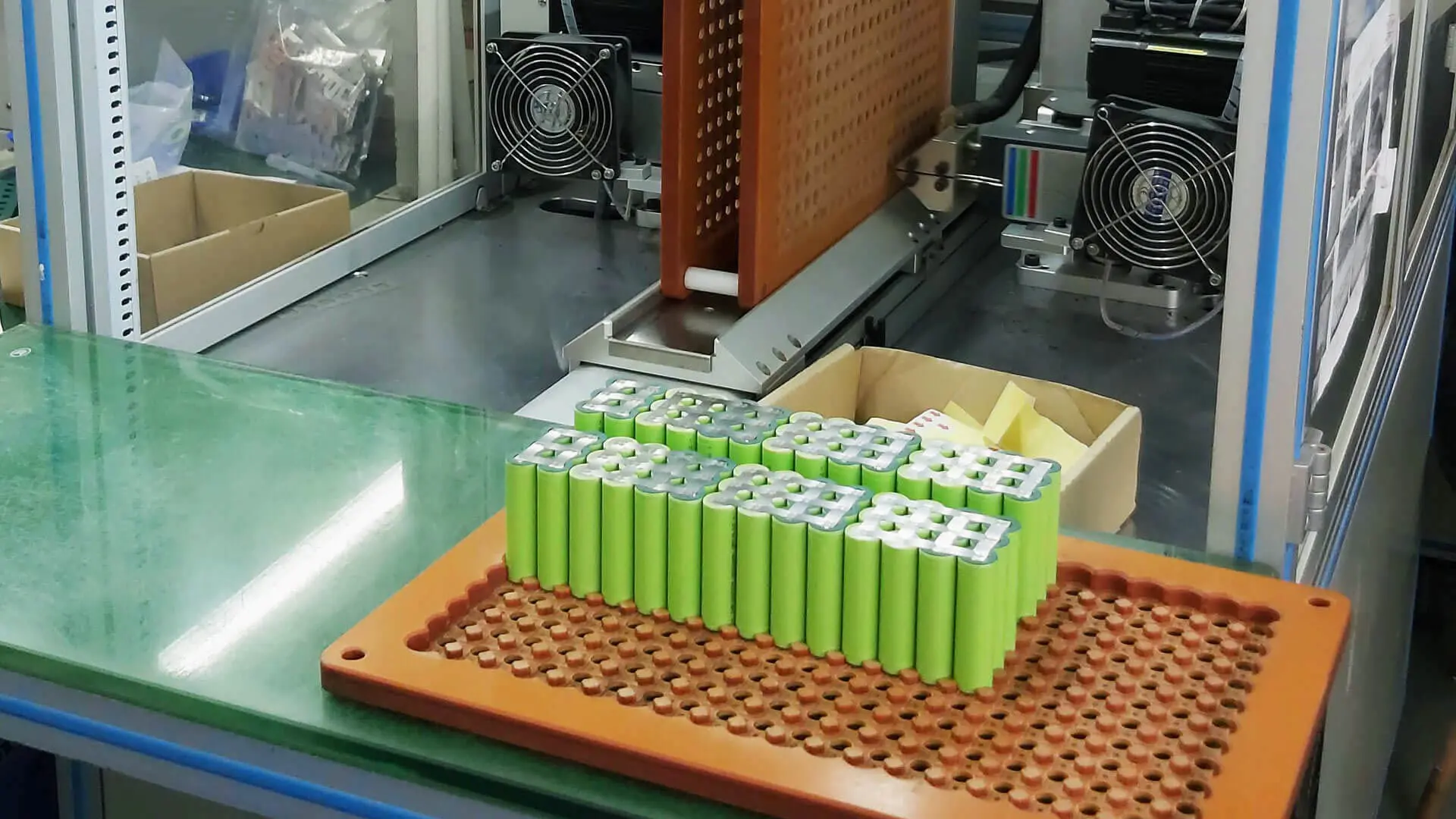
ChamRider doesn’t publish a detailed spec sheet per reference, but an order of magnitude can be estimated from the typical energy density of lithium cells (roughly 150 to 180 Wh/kg for cells alone). For 676 Wh, that’s about 3.8 to 4.5 kg of cells, plus the BMS and casing — likely a total weight between 4.3 and 5.2 kg, close to the 48V 14Ah despite the different voltage.
Charge cycles and real-world lifespan
The full ChamRider battery comparison states a guaranteed cycle count of 800+ for LFP cells. For daily use with a charge almost every day (roughly 250 to 300 cycles a year), that works out to roughly 2.5 to 3 years before a noticeable capacity drop — the dynamic riding style typical of 52V use can slightly speed up that timeline through more frequent charging.
Estimated charging time
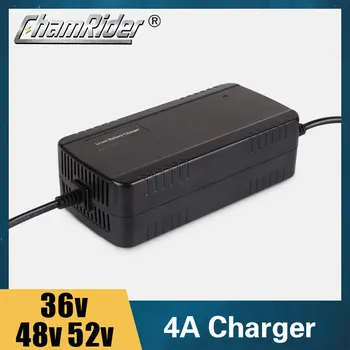
Chargers supplied with this type of battery typically deliver 2 to 3 A. For 13 Ah, that’s a theoretical full-charge time of about 4h20 to 6h30 (charging slows near the end of the cycle). Check the exact current shown on the supplied charger — a 52V charger is never interchangeable with a 48V one.
Who this battery is not for
Three profiles should look elsewhere: 36V hub motors or 48V mid-drives (incompatible, different voltage), uses chasing maximum range rather than performance — the 48V 20Ah suits that better — and tight budgets, since the 52V specificity usually costs more than 48V references of equivalent energy.
Frequently Asked Questions
Why choose 52V instead of 48V?
52V targets performance: higher top speed and more responsive motor feel, on systems specifically designed for this voltage. It’s not a range decision.
What real-world range should I expect from a ChamRider 52V 13Ah battery?
With 676 Wh and typical dynamic 52V use consuming 15 to 25 Wh/km, theoretical range sits between 27 and 45 km.
Are the 52V 13Ah and the 48V 14Ah interchangeable?
No, despite near-identical energy (676 Wh vs 672 Wh). The voltage the motor expects is the only criterion that matters, never displayed range.
How much does the ChamRider 52V 13Ah battery weigh?
Estimate based on typical lithium cell energy density (150-180 Wh/kg): roughly 3.8 to 4.5 kg of cells, for a likely total weight of 4.3 to 5.2 kg with BMS and casing.
How long does it take to fully charge this battery?
With a standard 2 to 3 A charger, about 4h20 to 6h30 for a full charge. A 52V charger is never interchangeable with a 48V one.
To compare this reference against the full lineup, see the full ChamRider battery comparison, or the dedicated 48V 14Ah page.
The 52V 13Ah targets performance — higher top speed and sharper response — not range, and despite storing almost the same energy as the 48V 14Ah (676 vs 672 Wh), the two remain incompatible on voltage alone.