
Assess Your Needs
Picking a battery starts with one number: how many watt-hours do you actually need? Voltage and amp-hours are secondary — what matters is energy capacity (Wh = V × Ah) relative to your ride distance and terrain. This guide gives you the formula and the thresholds to buy the right size once, without upgrading a year later.

CHAMRIDER BATTERIES
Available on AliExpress
CHAMRIDER BATTERIES


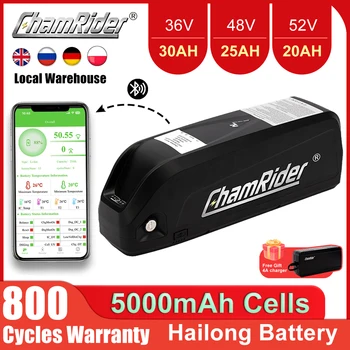
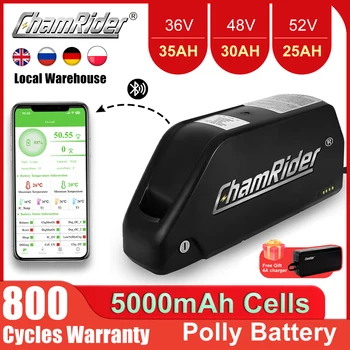
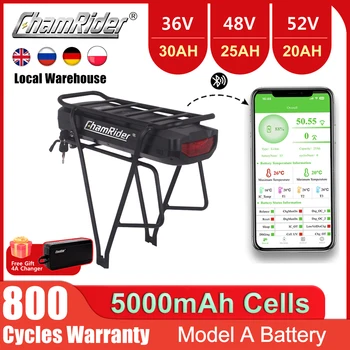

CHAMRIDER BATTERY BOX



CHAMRIDER COMPONENTS
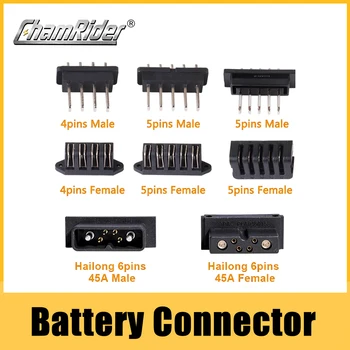
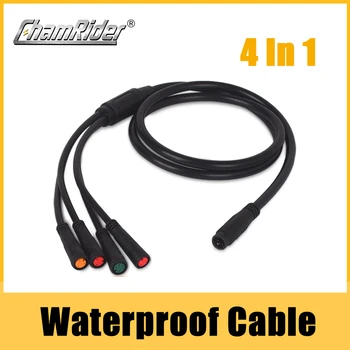
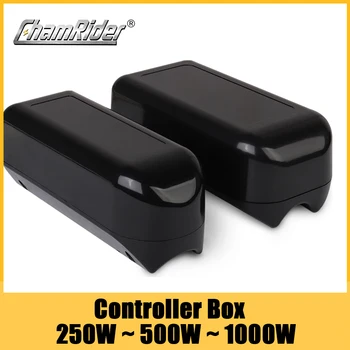
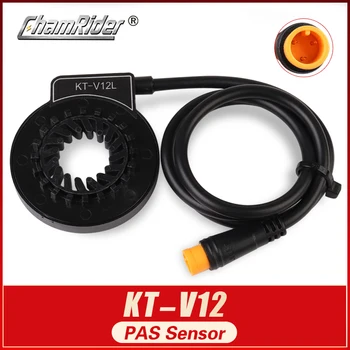
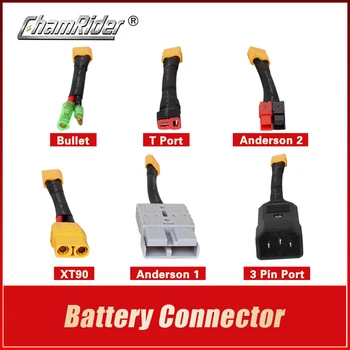

The first criterion when selecting an e-bike battery is voltage compatibility with your motor controller. A Bafang BBS02 mid-drive or hub motor running on 48 V requires a 48 V battery (nominal 48 V, fully charged at 54.6 V). Running a 52 V pack on a 48 V controller will trigger overvoltage protection and lock the system; a 36 V pack will cause the controller to operate in undervoltage with significant power loss. Before purchasing, check the controller’s spec label or the motor kit documentation — and if in doubt, contact ChamRider support with the motor reference for confirmation.
The second criterion is amp-hour capacity, sized to your daily riding distance. For urban commuting covering 10–20 km round trip at moderate assist, a 48 V / 10 Ah pack (480 Wh) is adequate. For 30–50 km routes or hilly terrain, a 15 Ah pack (720 Wh) provides comfortable headroom. Beyond 50 km of daily riding or for e-MTB use, 20 Ah packs (960 Wh) become the appropriate reference. Note that usable capacity in practice corresponds to the 20–80 % charge window — 60 % of rated capacity — so a “15 Ah” pack effectively delivers the equivalent of 9 Ah in longevity-optimized use.
The third criterion is battery mounting position, which determines physical integration and handling impact. Frame-integrated batteries (downtube or triangle insert) offer the best weight centering and the cleanest aesthetics, but require a frame designed for that specific form factor. Rear rack batteries are universally compatible with any bike fitted with a standard rack, easy to swap for charging, but raise the center of gravity and can limit pannier clearance. Triangle batteries offer a mid-way solution for standard frames not designed for integration. ChamRider supplies all three mounting formats — confirm the form factor that fits your specific frame before ordering.
The calculation is simple:
Voltage (V) × Capacity (Ah) = Energy (Wh)
For example: A 36V battery with 14Ah provides a capacity of 36 × 14 = 504 Wh.
2. How to calculate real-world range?
Choosing your ChamRider battery means estimating your riding range. This isn’t an exact science, as it depends on wind, elevation and rider weight.
However, an average consumption is commonly used:
- Average consumption: Around 8 to 12 Wh per kilometer.
The magic formula:
Range (km) = Battery capacity (Wh) ÷ Consumption (Wh/km)
Note: If you weigh around 90 kg and frequently climb hills in “Turbo” mode, expect closer to 15 Wh/km. Lightweight riders on flat terrain can go as low as 5 Wh/km.
3. Which battery for your daily riding distance?
The table below helps you choose based on your daily round-trip distance (including a 20% safety margin to avoid running out of power):
| Daily distance | Typical profile | Recommended capacity |
| < 20 km | City riding, flat terrain, short commute | 300 Wh – 400 Wh |
| 20 to 50 km | Suburban routes, some hills | 400 Wh – 540 Wh |
| 50 to 80 km | Long rides, significant elevation | 625 Wh – 750 Wh |
| > 80 km | Bike touring, intensive use | Dual battery (1000 Wh+) |
4. Three expert tips to avoid mistakes
- Plan for extra capacity: A battery typically loses 10 to 20% of its capacity after a few years. Buying a 500 Wh battery today ensures around 400 Wh remaining in three years.
- Cold weather is your enemy: In winter, range can drop by 20 to 30%. If your ride is borderline in summer, it won’t work in January.
- Weight matters: Higher capacity means more weight (around 3 to 4 kg for large batteries).
Consider Battery Capacity
ChamRider battery capacity varies depending on voltage.
For example:
- 24V (0 to 10Ah): Ideal for short distances.
- 36V (10 to 15Ah): A solid balance for everyday commuting.
- 48V (15 to 20Ah) and above: Designed for longer and more demanding rides.
The higher the capacity, the greater the riding range.
Analyze Voltage
52V or 60V batteries deliver superior performance. They are ideal for steep terrain or intensive use. Your motor must be fully compatible with the chosen voltage.
Take Weight into Account
Lithium-ion cells are lightweight and help keep your e-bike agile, but battery weight can still affect handling. Battery placement also impacts the overall center of gravity of the bike.
This factor becomes especially important at high speeds or during jumps.
In general, it is best to position the battery as low as possible.
Consider Battery Size
Check the dimensions to ensure a proper fit on your e-bike. Battery placement on the frame or rear rack should never be overlooked.
The mounting position affects both clearance and freedom of movement while pedaling.
A poorly positioned battery can quickly become a nuisance.
Check Compatibility
Choosing the right ChamRider battery means making sure it is compatible with your e-bike model and motor.
If necessary, always consult the motor manufacturer’s manual or website for specific recommendations.
Consider Your Budget
This may come as no surprise. Evaluate your budget by factoring in both the initial cost and the battery’s lifespan.
A high-quality battery can be a worthwhile long-term investment. Cheap often ends up being expensive.
Warranty and After-Sales Support
Choosing a ChamRider battery also means ensuring the seller offers a solid warranty and responsive customer support.
This protects you against defects and ensures assistance when needed. The purchase source is therefore a crucial factor.
You can often assess a retailer’s service quality through customer reviews.
Related guides: battery comparison guide — battery technology — battery maintenance and safety
Related guides: battery comparison guide — battery technology — battery maintenance and safety
See also: ChamRider Home — ChamRider Batteries — Accessories ChamRider — Maintenance & safety — Range & capacity — Battery comparison — Battery technology — Customer reviews