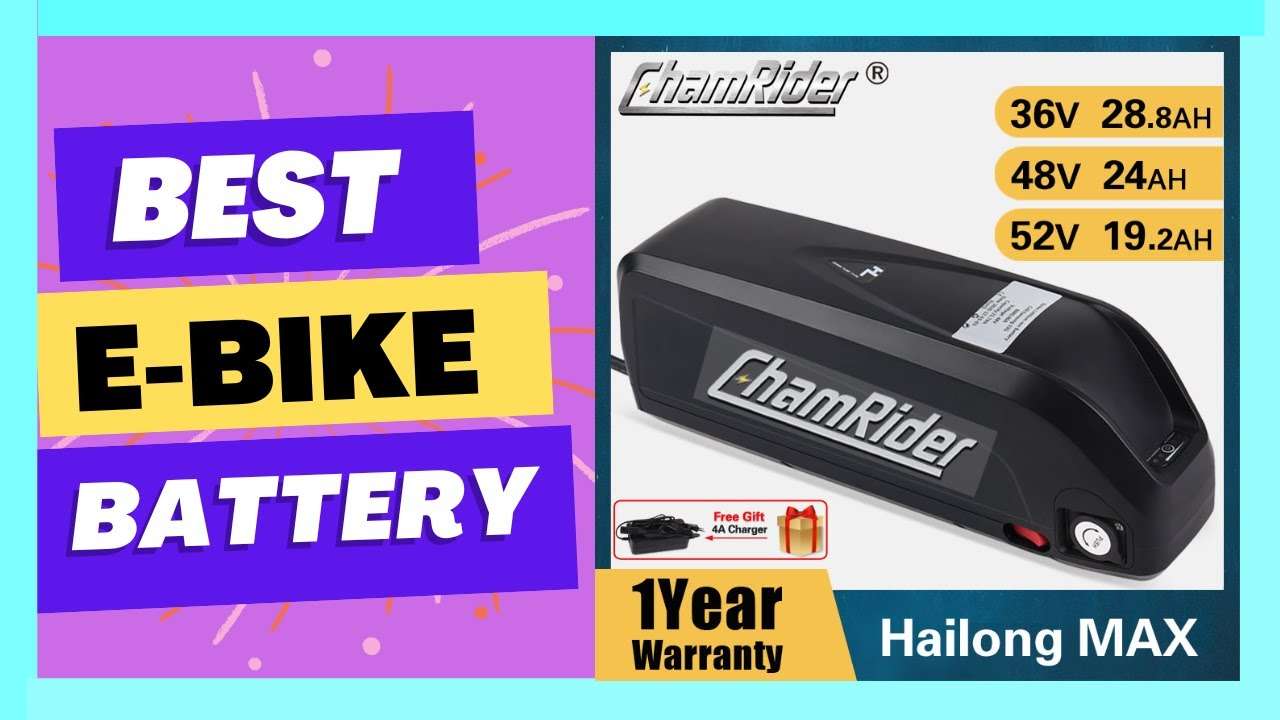
Not all lithium-ion packs are equal. ChamRider batteries use Samsung cells — the same type found in premium brand packs — paired with a multi-stage BMS handling cell balancing, overcharge cutoff, and thermal management. Available in 36V, 48V, 52V, and 72V from 15Ah to 45Ah, with multiple form factors for different frame types.

CHAMRIDER BATTERIES
Available on AliExpress
CHAMRIDER BATTERIES


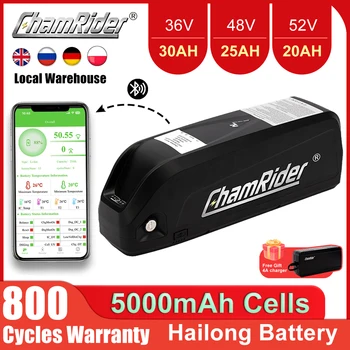
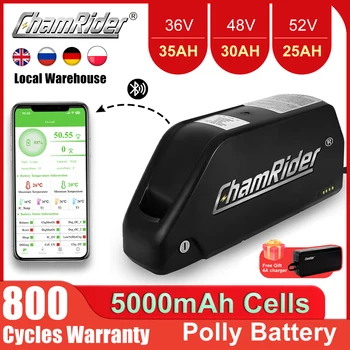


CHAMRIDER BATTERY BOX



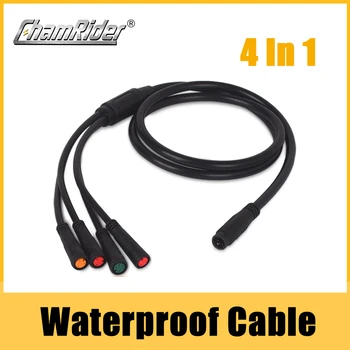
CHAMRIDER COMPONENTS


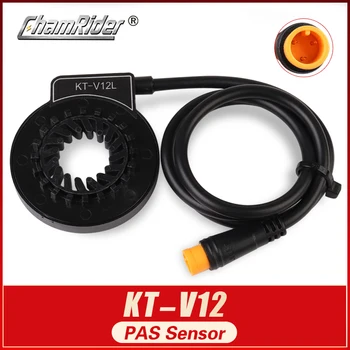
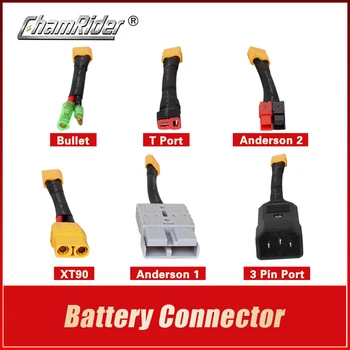

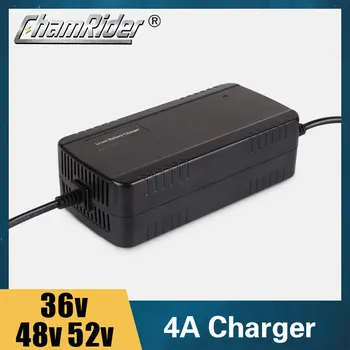
ChamRider Lithium-Ion Batteries

ChamRider Battery Voltage
Battery voltage — 36 V, 48 V, or 52 V — directly sets the power ceiling your motor can reach. At the same amp-hour capacity, a 48 V pack delivers 33 % more power than a 36 V unit, which translates to stronger hill-climb response and reduced motor heat under load. Always match voltage to your controller’s specification: mismatching by even one step can trigger BMS protection faults or, in worst cases, damage the controller permanently.
Capacity in amp-hours (Ah) multiplied by voltage gives total stored energy in watt-hours (Wh). A 48 V / 15 Ah pack holds 720 Wh. Real-world consumption runs 12–18 Wh/km depending on rider weight, gradient, assist level, and wind. At 15 Wh/km — a realistic average for a 80 kg rider on mixed terrain at assist level 3 — that 720 Wh pack covers 48 km. Factor in a 20 % reserve for cold weather capacity drop, and 40 km becomes your practical planning range for winter commutes.
21700 cells offer roughly 20 % higher energy density than the older 18650 format at equal volume. A pack built on 21700 cells that fits a standard downtube slot can store 720 Wh where an 18650 pack of the same physical size caps out around 600 Wh. The larger cell format also manages heat better under sustained high-current draw — relevant for long alpine climbs or sustained 750 W operation. ChamRider offers both cell formats, each sourced from certified manufacturers with full traceability documentation.
- Lead (Gel) Batteries
These batteries are increasingly less used due to their low capacity and heavy weight. They require up to 10 hours for a full charge and offer a lifespan of only 150 to 200 cycles. - Lithium-Ion (Li-ion) Batteries
Currently the most popular, they offer an excellent weight-to-capacity ratio and have no memory effect. However, they must be handled with care. Overheating should be avoided. This requires a Battery Management System (BMS) to balance the charge. - LiPo Batteries
Although common in electronic devices, they are not suitable for electric bikes due to their sensitivity to shocks and vibrations. They pose a fire risk under unfavorable conditions. - LiFePo4 Batteries
Recently popular, they are resistant to extreme temperatures and can last about 1,000 cycles. Their main drawback is their high cost.
Frequently Asked Questions About ChamRider Batteries
How can I avoid damaging the battery?
Use the “sleep” mode to preserve the battery’s energy. It will automatically go into sleep mode after a few hours of inactivity.
How should I store the battery in winter?
Charge it to 50% and keep it in a cool place, preferably off the bike.
Do batteries heat up during charging?
Yes, that’s normal. This occurs with all types of batteries.
What is the memory effect?
This refers to a decrease in capacity. It occurs during recharging when the battery is not fully discharged. Li-ion batteries have little or no memory effect.
What is self-discharge?
This refers to a gradual loss of energy when the battery is not in use. Li-ion batteries have a low self-discharge rate, around 5% per month.
4 Major Tips for Extending the Life of Your ChamRider Batteries
- Do not go below 20% charge.
- Wait for the battery to cool down before recharging it.
- Do not fully charge it if it’s not necessary.
- Avoid extreme temperatures.
By following these recommendations, you ensure optimal battery lifespan for your electric bike.
Testing ChamRider Batteries?
How and why should you check the voltage of an electric bike battery?
In general, users are concerned about their electric bike battery performance. A simple method is needed to evaluate its voltage in order to optimize the riding experience.
Checking the Voltage of a ChamRider Battery
Maintaining optimal voltage is crucial for the proper functioning and longevity of your electric bike battery. Regular checks allow you to:
Ensure Optimal Performance
The battery’s voltage directly influences your bike’s performance. Too low a voltage can limit power, while too high a voltage can damage the battery and other components. By regularly checking the voltage, you ensure optimal operation.
Prevent Battery Failures
Without regular checks, it’s hard to detect a loss in charge capacity before it’s too late, which can lead to unexpected breakdowns. By monitoring the voltage, you can spot potential issues in time and avoid inconveniences.
Extend Battery Lifespan
Poor charging practices, whether overcharging or undercharging, can significantly reduce the battery’s service life. By monitoring voltage, you ensure proper recharging, which will contribute to its longevity and your budget.
Regularly checking the battery voltage is critical. It ensures good performance, prevents unexpected breakdowns, and extends the battery’s service life.
How to Check a ChamRider Battery?
To measure the voltage, you’ll need a multimeter. Here are the steps to follow:
Turn Off the Electric Bike: Make sure your bike is turned off and disconnect the charger before you start. This ensures your safety and protects the battery.
Locate the Battery: Find the battery on your bike. Depending on the model, it may be located in various places—inside the frame, on the rear rack, or under the saddle. If in doubt, consult the user manual.
Measure the Voltage with a Multimeter: Once you’ve found the battery, use the multimeter. Set it to DC voltage measurement and choose an appropriate range, e.g., 0-40V for a 36V battery. Connect the multimeter probes to the battery terminals: red to the positive (+) and black to the negative (-). Turn on the multimeter and read the displayed value. It should match the battery’s nominal voltage.
Interpret the Results: If the reading is higher than the nominal voltage, the battery is likely overcharged and may be damaged. If the reading is lower than the nominal voltage, the battery is weak and needs charging. If the reading is within the normal range, the battery is fully charged and ready for use.
Checking the battery voltage is an essential maintenance task. It helps ensure durability and proper operation of your electric bike.
When Should You Check the Voltage of a ChamRider Battery?
Voltage checks should be done regularly. Here are some key times to do it:
Before Riding: It’s important to check the voltage before each outing to ensure the battery is fully charged. If the voltage is below the recommended level, recharge it before you go.
After a Ride: Check the voltage after your trip to assess the remaining range. This helps you plan your next outings and avoid running out of battery mid-ride.
During Regular Maintenance: Include this check in your monthly maintenance tasks. A significant drop in voltage could indicate it’s time to replace the battery.
When Storing the Bike: If you’re planning to store your bike for some time, check the voltage before storing it. A fully charged battery can be stored for several months without losing charge.
Checking the voltage of an electric bike battery is an essential aspect of regular maintenance. It helps keep your equipment in good shape and avoid inconveniences. Follow these tips to ensure the longevity and performance of your bike.
Managing the Range of ChamRider Batteries
The way an electric bike system disconnects based on your riding style plays a crucial role in battery performance. Today, almost all major bike manufacturers offer a range of electric bikes, both for road and trail.
From electric cargo bikes to carbon fiber models that are almost identical to traditional bikes, electric bicycles have evolved from a curiosity to practical equipment.
Anyone who has invested in battery-powered electronics can attest to a noticeable decrease in their performance over time. Similarly, for those considering buying an electric bike, as well as current owners, battery maintenance is a key consideration.
Understanding Battery Technology
Bicycle battery suppliers have opted for lithium-ion technology, which has proven reliable in electronics and automotive industries. As a result, a wealth of user data on battery health is available.
The motor in your electric bike has an extended service life due to its low number of moving parts. However, the battery is more likely to degrade over time.
Capacity degradation is a common phenomenon for smartphone and laptop users, but it can be mitigated. The main factor affecting the health of electric bike batteries is frequent charging from very low levels.
If you frequently drain your battery almost completely, you risk accelerating its degradation. It’s best to minimize the time spent at 0% and 100% capacity.
Using the Battery Wisely
To preserve your electric bike battery’s health, it is essential to limit the depth of discharge.
While maximum assistance is tempting, it’s not always necessary, especially given the limits imposed on electric bike systems in some countries where speed is capped at 25 km/h. Save full power for the steepest hills.
By using the battery capacity judiciously, you’ll ensure better long-term battery health.
The electric motor also performs better with a stable cadence of around 80 revolutions per minute. To optimize the user’s input along with the motor’s output, maintain a high cadence with lower gears.
If you frequently use your electric bike and often deplete the battery, consider models with higher battery capacity, or opt for range extenders to balance the energy system.
Rethinking the Notion of “Free Speed”
Speed regulations and specifications for electric bikes vary from one country to another.
In the United States, the maximum power of electric bike motors can reach 750W, with assistance cutting out at around 20 mph (32 km/h). In contrast, Europe and the UK apply more stringent standards, limiting power to 250W and assistance speed to 25 km/h.
Cyclists in the EU and the UK generally experience less battery degradation due to their bikes’ configurations. By using more conservative assistance software, electric bikes in Europe theoretically operate more efficiently than their American counterparts.
Electric bikes intended for commuting or active use are not designed for speed. Their value lies in their ability to tackle long trips on hilly routes or ease the effort against headwinds on the way back.
Electric bikes are particularly useful for helping cyclists on steep climbs or against the wind, where speed often drops. Active commuters don’t need to climb slopes at 40 km/h.
For electric bike enthusiasts in the EU and the UK, the more conservative 7 km/h assistance setting for mid-drive motors provides an excellent riding experience and promotes better long-term battery health.
Repairing ChamRider Batteries
The ChamRider battery of an electric bike is a crucial component that transforms a regular bike into an electric model. However, it is also one of the costliest parts, with prices ranging from $500 to $1000 depending on the model.
This raises an essential question: is it possible to repair ChamRider electric bike batteries? Given their cost and importance to users, this is a legitimate concern.
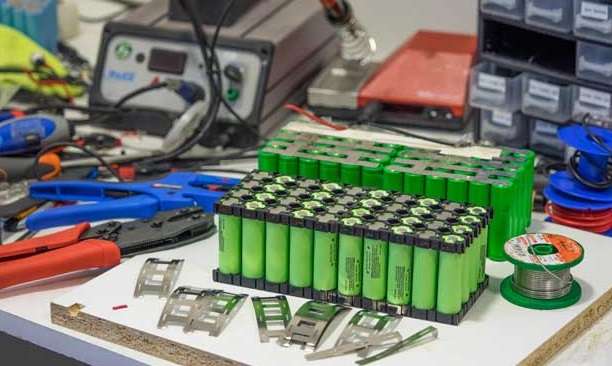
The Repairability of ChamRider Batteries
Generally speaking, it is possible to repair electric bike batteries, as their main components—such as battery cells, the BMS (Battery Management System), and wiring—can be replaced. Thus, a battery can be restored by replacing these elements.
Here is an overview of the most common problems encountered with electric bike batteries, their symptoms, and potential solutions.
BMS Issues
The Battery Management System (BMS) protects the battery by regulating current flow. It is connected to all the battery’s cells and measures their individual capacity. If one cell discharges too much, the BMS cuts off power completely to avoid damage.
If you notice the battery still has energy but does not charge or discharge, it indicates a BMS problem.
How to Fix BMS Issues:
There are generally two approaches: reset it or replace it. Personally, I prefer replacement because BMS prices are affordable.
Steps to Reset the BMS:
Remove the battery cover.
Disconnect the BMS cables.
Connect the battery to the charger and begin charging.
Reconnect the BMS cables while charging.
Steps to Replace the BMS:
Remove the battery cover.
Unsolder the main BMS cables.
Disconnect the battery connector.
Install the new BMS in the same place.
Resolder the cables.
Reconnect the connector to the battery.
Test the battery’s charge.
Important note: BMS failure comes from defective cells. Before replacing the cover, measure the voltage of all cells to verify their proper functioning.
Damage to One or More Cells
Another common issue is the failure of one or more cells, rendering the battery completely unusable. To identify damaged cells, measure the voltage of each cell. Most will show a stable voltage (e.g., 4.1 or 3.8 volts). If one cell displays a significantly lower value, that’s the problematic one.
Visible signs of damage, such as black substances or cuts on the casing, may also be observed.
Note: Replacing cells requires specialized equipment. We recommend entrusting this task to a professional.
Disconnected Wires
Another major problem is the presence of cut or disconnected wires inside the battery, which can cause it to fail. This usually occurs after a fall.
To fix this, remove the cover, locate the damaged wires, and reconnect them. Use a voltmeter to measure the voltage. If the reading is consistent with the number of cells, you can determine the battery’s capacity.
Loose Battery Connection
When connected to the bike, the battery may damage or break the connection pins, making the battery inoperative. Visually inspect the pins; if they appear poorly installed, adjust them with a screwdriver after turning off the battery.
Charger Failure
Finally, the issue may not be with the battery but with a faulty charger. To check, try charging the battery with another charger or test the charger itself.
In general, electric bike batteries can be repaired by replacing the internal cells, the BMS, or correcting the wiring. The most common failures involve the BMS, cells, and internal connections. It is essential to accurately diagnose the problem before undertaking repairs.
Preventing ChamRider Battery Fires
Fires involving electric bike batteries are on the rise and often make headlines. Are these incidents common? If you own an electric bike, what are the chances it will catch fire? More importantly, how can you prevent it?
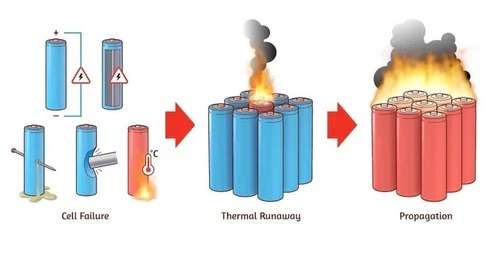
How Does a Battery Fire Start?
The lithium-ion batteries used in electric bikes can catch fire due to a phenomenon called “thermal runaway.” This occurs when an internal battery defect leads to a short circuit, often due to a manufacturing error, misuse, or external damage. This short circuit releases a large amount of heat, causing a chemical reaction that produces even more heat. This cycle can quickly destroy internal components, generating intense heat and toxic gases, making it difficult to extinguish.
Fortunately, thermal runaway cases remain rare and are largely avoidable.
How Often Do Battery Fires Occur?
It’s difficult to estimate the exact number of electric bike battery fires worldwide. However, a recent report by the UK organization Electrical Safety First indicates that 167 fires were caused by electric bikes and scooters in the UK in 2021. In 2022, the London Fire Brigade reported 87 fires caused by electric bikes and 29 by scooters.
These figures don’t allow for an exact percentage of bikes that caught fire since the total number of bikes in circulation at that time is unknown. Still, it’s estimated that 160,000 electric bikes and 175,000 scooters were sold in the UK in 2021.
In Sweden, a study found that there were 20 electric bike fires in 2022, out of a total of 608,000 sales since 2014. This represents about 0.003% of bikes in circulation that year.
How Dangerous Is a Battery Fire?
Although battery fires are rare, tragic incidents have occurred, with several deaths reported in the UK and New York. Between April 2022 and March 2023, 36 incidents were documented, most occurring at home, often at night. In the first three months of 2023, four people lost their lives due to these fires in the UK.
Globally, data collected by EV FireSafe indicates that there were 138 injuries and 36 deaths due to light electric vehicle fires in 2023.
Which Electric Bikes Present the Most Risk?
Electrical Safety First warns against buying electric bikes or batteries from third-party sellers, as these products may not meet safety standards. Non-professional modifications, such as those aimed at increasing battery life, can also pose a risk. About 60 models of poor-quality electric bike chargers are regularly sold by unreliable resellers.
Why are electric bikes more likely to catch fire than electric cars?
It’s important to note that electric bike batteries are generally of lower quality and less regulated than those in electric cars. EV FireSafe estimates that the probability of an electric car catching fire is 0.0012%, much lower than that of electric bikes.
Advice and Recommendations
Electric bike batteries rarely catch fire. When they do, it’s usually when charged indoors, posing a potential hazard. Although these incidents are increasing, they remain rare compared to the total fleet of electric bikes. The bikes at greatest risk are those that have been modified, those charged improperly, and those purchased from non-compliant sellers. To safely charge an electric bike, keep it away from exits and avoid charging it overnight. In general, the risk of fire is very low for a high-quality electric bike that is used correctly.
Related guides: battery technology — battery selection guide — battery maintenance and safety
Related guides: battery technology — battery selection guide — battery maintenance and safety
See also: ChamRider Home — Accessories ChamRider — Maintenance & safety — Range & capacity — Battery comparison — Battery technology — Choosing guide — Customer reviews